You’ve probably done this before…
Picked up a cleaning product, read the front label, and thought,
“This sounds safe.”
Then you flip it over and suddenly it’s a wall of ingredients, vague claims, and tiny print that doesn’t really answer your question.
Because what you’re really trying to figure out is simple:
Can I trust this?
The truth is, most labels are designed to sell—not to explain.
But once you know how to read them, everything changes. You stop guessing… and start making choices you actually feel confident about.
Why Labels Feel So Confusing?
Cleaning product labels often mix:
- Marketing language (what sounds good)
- Technical language (what’s required)
- Missing context (what you actually need to know)
As a result, it’s easy to assume something is safe or effective—without having the full picture.
The goal isn’t to memorize chemistry.
It’s to know where to look—and what matters.
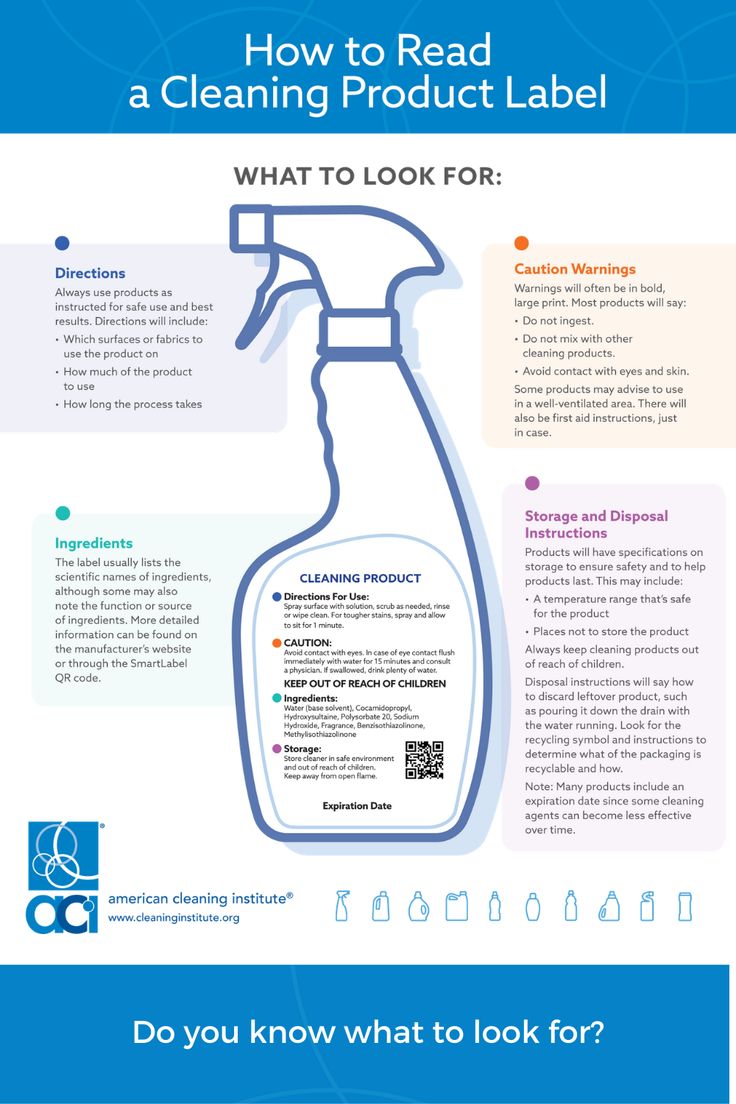
Steps to help you Read and Understand Cleaning Products Labels
Step 1: Start With the Product’s Purpose
Before you even read the ingredients, ask:
- Is this a cleaner or a disinfectant?
- What is it designed to do?
Because not all products do both.
- Cleaners remove dirt and grease
- Disinfectants kill bacteria and viruses (when used correctly)
If the label isn’t clear about this, that’s your first red flag.
Step 2: Look at the Active Ingredients
This is where the real work happens.
Active ingredients tell you:
- What’s doing the cleaning or disinfecting
- How strong the product is
- What kind of exposure it may create
Be mindful of frequent exposure to:
- Bleach (sodium hypochlorite)
- Ammonia
- Quaternary ammonium compounds (“quats”)
These can be effective—but may also impact:
- Air quality
- Skin sensitivity
- Long-term exposure levels
Because effectiveness should always be balanced with safety.
Step 3: Check for Full Ingredient Transparency
A trustworthy label doesn’t hide what’s inside.
Look for:
- A complete ingredient list (not just actives)
- Clear naming—not vague categories
- No “proprietary blend” without explanation
If a product isn’t transparent, you’re left guessing.
And guessing isn’t where confidence comes from.
Step 4: Decode Marketing Language
This is where many people get misled.
Terms like:
- “Natural”
- “Green”
- “Eco-friendly”
- “Non-toxic”
…can sound reassuring—but often lack strict regulation.
That doesn’t mean they’re false—it means they’re incomplete.
What matters is:
- What’s behind the claim
- Whether it’s supported by ingredients or certifications
Step 5: Look for Verified Certifications
Certifications help cut through the noise.
Look for labels from organizations like:
- EPA Safer Choice
- Green Seal
- EWG Verified
These indicate that a product has been reviewed for:
- Safety
- Environmental impact
- Ingredient transparency
Because third-party validation adds credibility that marketing alone can’t provide.
Step 6: Pay Attention to Usage Instructions
This is one of the most overlooked sections—and one of the most important.
Look for:
- Proper dilution (if required)
- Dwell time (how long it must sit to work)
- Surface compatibility
- Safety precautions
Because even the best product won’t work or be safe, if it’s used incorrectly.
Step 7: Notice Fragrance and Additives
“Fragrance” can be one of the most misleading parts of a label.
It often represents a mix of undisclosed ingredients.
For more informed choices, look for:
- Fragrance-free options
- Or clearly disclosed scent sources
This is especially important for:
- Children
- Pets
- Sensitive environments
Where Noni Pro Cares Fits In
If all of this feels like a lot to evaluate, you’re not wrong.
That’s why products like Noni Pro Cares are designed to simplify the process.
They focus on:
- Clear, transparent ingredient choices
- Effective cleaning without unnecessary complexity
- Supporting safer, more confident decisions
Because you shouldn’t need a chemistry degree to trust what you’re using.
The Real Shift: From Confusion to Confidence
Most of the overwhelm around cleaning products comes from not knowing what to look for.
But once you understand:
✔ Where the truth lives on a label
✔ What claims actually mean
✔ How to spot red flags
You move from:
- Guessing → to informed decisions
- Doubt → to clarity
- Overwhelm → to confidence
The Bottom Line
Reading cleaning product labels isn’t about perfection.
It’s about awareness.
When you know how to look beyond the front of the bottle, you can:
- Avoid greenwashing
- Choose products that align with your values
- And create a space that’s not just clean but truly supported
Because the more you understand, the better choices you make.