You’re wiping things down, doing your best to stay on top of it…
but there’s still that quiet question:
“Is this actually enough?”
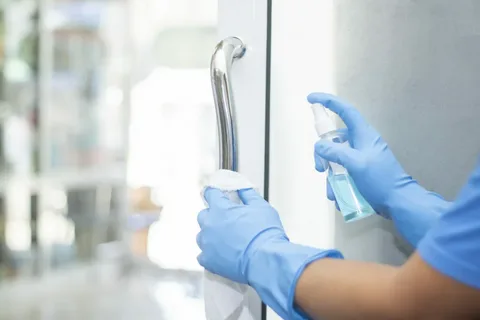
Because high-touch areas, the spots everyone reaches for without thinking, are where germs spread the fastest. And if those aren’t handled properly, it can undo a lot of your effort.
At the same time, you don’t want to fill your space with harsh chemicals just to feel “safe.”
The good news is: you don’t have to choose between effective and safe.
You just need a clear, repeatable system that works with non-toxic products.
Why High-Touch Areas Deserve Extra Attention?
Not every surface needs constant disinfecting.
But these do:
- Door handles and knobs
- Light switches
- Countertops and shared surfaces
- Phones, tablets, and keyboards
- Bathroom fixtures
- Checkout counters or shared equipment
Because these areas are touched frequently, they become the fastest pathway for germs to spread.
And the reality is, if they’re missed or rushed, they can quietly impact the overall cleanliness of your space.
The Common Mistake Most People Make
Here’s what often happens:
- A quick spray
- A fast wipe
- Move on
It feels productive… but it skips the most important part of disinfecting:
Time.
Because disinfecting isn’t just about applying a product, it’s about allowing it to work.
The Safer Approach: Clean First, Then Disinfect
To do this effectively (and safely), follow a two-step process:
Step 1: Clean the Surface
Before disinfecting, remove:
Use a gentle, non-toxic cleaner to:
- Wipe down the surface
- Eliminate buildup
Why this matters:
Disinfectants can’t do their job properly if they’re sitting on top of grime.
Step 2: Apply Your Disinfectant Correctly
Now it’s time to disinfect.
- Apply enough product to fully cover the surface
- Ensure even distribution
- Don’t rush the process
This is where non-toxic disinfecting solutions can shine, especially when designed for regular, safe use.
Step 3: Respect the “Dwell Time”
This is the step that makes or breaks effectiveness.
- Leave the surface visibly wet for the recommended time (often a few minutes)
- Avoid wiping immediately
Because this is when germs are actually being neutralized.
Step 4: Wipe or Let Air Dry (As Directed)
- Follow product instructions
- Use a clean microfiber cloth if wiping is needed
- For food-contact surfaces, do a final rinse if required
How Often Should You Disinfect?
It depends on your environment.
In Homes:
- Daily for high-use areas (kitchen, bathrooms)
- More frequently during illness or high traffic
In Businesses:
- Multiple times per day for shared surfaces
- After each use in high-contact environments
- Consistently throughout operating hours
Because consistency matters more than intensity.
Choosing Non-Toxic Products That Still Work
Not all “safe” products are effective and not all effective products are safe for daily use.
The goal is to find solutions that:
✔ Disinfect properly
✔ Minimize harmful exposure
✔ Are practical for consistent use
That’s where products like Noni Pro Cares come in.
They’re designed to:
- Support effective disinfecting without harsh chemical overload
- Be suitable for everyday environments
- Help you maintain cleanliness without second-guessing safety
Because when your products are safe to use regularly, your system becomes sustainable.
Tools That Make a Difference
Your process matters but so do your tools.
- Microfiber cloths (better at trapping particles)
- Separate cloths for different areas (to prevent cross-contamination)
- Gloves if needed for sensitive skin
- Clearly labeled cleaning zones in business settings
The Real Shift: From Reactive to Routine
A lot of people only disinfect when they feel it’s necessary.
But the real impact comes from consistency.
Not overdoing it.
Not underdoing it.
Just having a system you can actually stick to.
The Bottom Line
You don’t need complicated routines or harsh chemicals to keep high-touch areas safe.
You need:
- A simple, repeatable process
- The right non-toxic products
- And a commitment to consistency
Because a clean space isn’t created in one deep clean, it’s maintained through small, intentional actions every day.