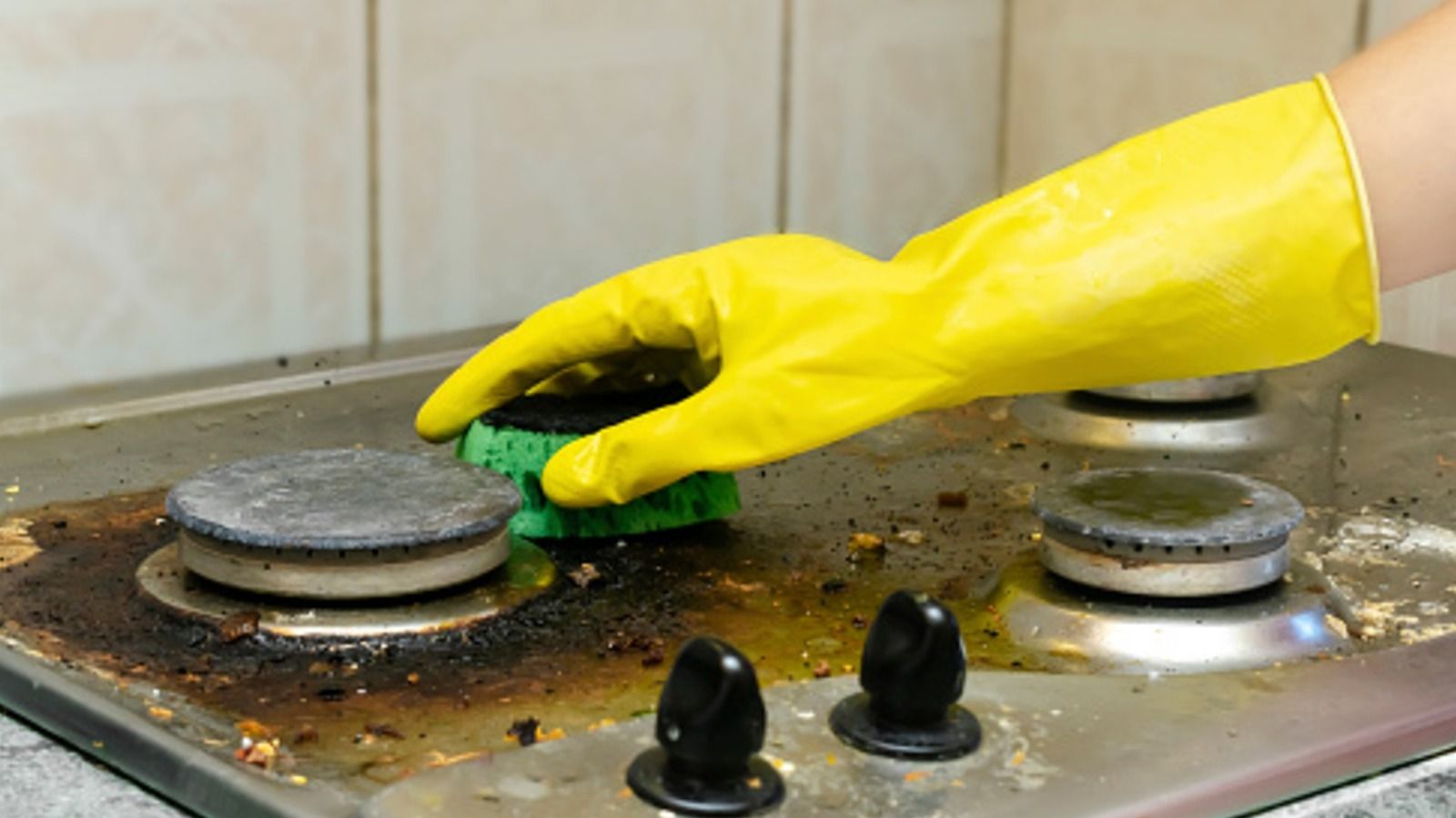
You’re wiping, scrubbing, going over the same spot again… and that layer of grease still won’t budge. It’s frustrating—especially in a kitchen, where clean isn’t just about appearance. It’s about hygiene, safety, and confidence in the space you’re preparing food in. So you reach for something stronger… and then hesitate.
Because now you’re weighing two concerns at once:
Will this actually cut through the grease?
And is it safe to use around food, family, or customers?
The good news is—you don’t have to choose between power and safety.
With the right approach, green, plant-based products can handle even stubborn kitchen grease—without leaving behind harsh residues.
Why Grease Is So Stubborn (and Why It Matters)?
Kitchen grease isn’t just surface-level mess.
It builds up over time from:
- Cooking oils and fats
- Food splatter
- Heat that causes residue to bond to surfaces
As a result, grease:
- Traps bacteria and odors
- Creates sticky, hard-to-clean layers
- Reduces the overall hygiene of your kitchen
And in food-prep areas, that’s something you can’t afford to overlook.
The Common Mistake Most People Make
Here’s where things usually go wrong:
People assume “green” products are too gentle to handle heavy grease…
so they either:
- Overuse product (which doesn’t solve the problem), or
- Give up and switch to harsh chemical degreasers
But the real issue isn’t the product—it’s the process. Because even the best cleaner won’t work if it’s rushed or used incorrectly.
What Makes a Green Degreaser Effective?
Not all plant-based cleaners are created equal.
Look for products that:
- Use surfactants (plant-derived cleaning agents) to break down oils
- Are designed specifically for grease—not just general cleaning
- Are safe for food-contact surfaces when used as directed
Because effective degreasing comes down to chemistry + technique.
A Step-by-Step System That Actually Works
Let’s simplify this into a process you can follow consistently:
Step 1: Remove Loose Debris First
Before you even reach for a cleaner:
- Wipe away crumbs, dust, and surface buildup
- Use a dry or slightly damp cloth
Why this matters:
Grease binds more tightly when it mixes with debris—so clearing the surface first makes everything easier.
Step 2: Apply Your Green Degreaser Generously
Don’t mist lightly and expect results.
- Apply enough product to fully coat the greasy area
- Focus on high-buildup zones (stovetops, range hoods, backsplashes, cabinet fronts)
This is where many people under-apply—and lose effectiveness.
Step 3: Let It Sit (This Is the Game-Changer)
This is the step most people skip.
- Allow the product to sit for 2–5 minutes (or as directed)
- Give the plant-based ingredients time to break down oils
Because degreasing isn’t instant—it’s a process.
Step 4: Agitate the Surface
Now it’s time to lift the grease.
- Use a microfiber cloth, sponge, or soft brush
- Apply light to moderate pressure
- Work in circular motions for stubborn spots
For heavy buildup, you may need a second pass.
Step 5: Rinse or Wipe Clean Thoroughly
Especially important for food-prep areas:
- Use a clean, damp cloth to remove residue
- Ensure no cleaner is left behind
Because even safe products should be properly removed in kitchens.
Step 6: Dry and Finish
- Use a dry microfiber cloth to finish the surface
- This helps prevent streaking and future buildup
Where Green Degreasing Makes the Biggest Impact
Focus your efforts where grease accumulates fastest:
- Stovetops and burners
- Range hoods and filters
- Backsplashes
- Cabinet doors and handles
- Countertops near cooking areas
- Small appliances (microwaves, air fryers, coffee stations)
Consistency here prevents heavy buildup later.
Making This Easier With the Right Products
When your products are working with you—not against you—this whole process becomes simpler.
That’s where solutions like Noni Pro Cares come in.
They’re designed to:
- Cut through grease effectively using safer, plant-based formulas
- Be suitable for kitchens and food-prep environments
- Reduce the need for harsh, chemical-heavy alternatives
Because when your cleaning system is both effective and safe, you don’t have to second-guess every wipe.
The Real Shift: From Scrubbing Harder to Cleaning Smarter
A lot of people think degreasing is about effort.
More scrubbing. More product. More time.
But in reality, it’s about:
✔ Using the right formula
✔ Letting it do its job
✔ Following a consistent process
And once you dial that in, everything changes.
Conclusion
You don’t need harsh chemicals to handle tough kitchen grease.
You need:
- The right plant-based product
- A clear, repeatable system
- And a little patience in the process